 +1 480 485 7373
 Microsoft Teams
Where a small plant's numbers usually drift
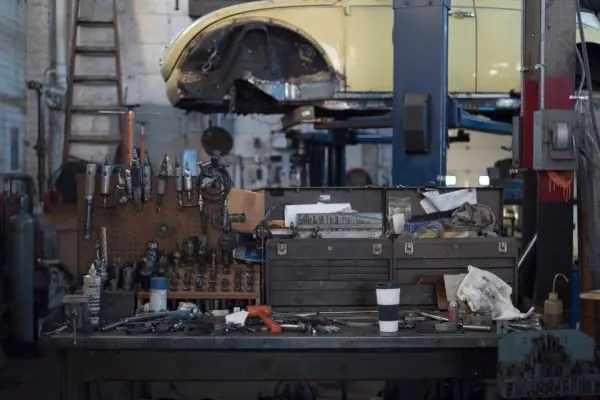
Most manufacturers who call us already have accounting software and a pile of spreadsheets around it. The bill of material lives in an engineering file, labor is estimated once a year, and inventory is valued at whatever the last purchase price happened to be. Gross margin looks fine until a physical count moves it by a surprising amount.
Business Central closes that gap by making the production order the place where material and time are recorded. Components are consumed against a specific order, output is posted with the hours and scrap that went into it, and the difference between expected and actual cost is posted as a variance you can trace to a work center or a component. Finance stops guessing because the plant is feeding it facts every day.
Discrete, assemble-to-order or process: how well each fits
The manufacturing tools you will actually use
Production BOMs and routings
Multi-level bills of material with version control, and routings that list each operation, its work center or machine center, and setup and run times.
- ✓Versioned BOMs and routings
- ✓Scrap percentages per component
- ✓Subcontracted operations with a vendor
- ✓Phantom and sub-assembly levels
MRP and the planning worksheet
The planning worksheet reads demand from sales orders and forecasts, nets it against stock and open orders, and suggests purchase and production orders a planner accepts or edits.
- ✓Demand forecasts by item and location
- ✓Reordering policies per item
- ✓Action messages to reschedule or cancel
- ✓Capacity load by work center
Consumption and output
Material is consumed and finished goods are posted either manually through journals or automatically by flushing, forward or backward, depending on how disciplined the floor can realistically be.
- ✓Output and consumption journals
- ✓Forward and backward flushing
- ✓Lot and serial tracking
- ✓Scrap and rework recording
Standard cost and variances
With standard costing, the gap between what a batch should have cost and what it did cost posts as purchase, material, capacity and overhead variances.
- ✓Standard cost worksheet roll-ups
- ✓Overhead rates per work center
- ✓Inventory valuation reports
- ✓Adjust cost batch job
Signs Business Central is the wrong fit for your factory
- ✓You need finite scheduling that sequences hundreds of orders against tooling, crews and changeovers in real time. Business Central plans capacity, but a dedicated scheduling add-on does that job better.
- ✓Your process runs on formulas with potency, yield by batch and co-products as the norm, and you are not prepared to add a process manufacturing app.
- ✓You run several large plants with shared engineering, quality labs and warehouse automation, where Dynamics 365 Supply Chain Management was built for the scale.
- ✓The shop floor has no way to record consumption and output yet. The software cannot fix a process nobody follows, so that habit comes first.
From routing sheets to the first released production order
- 1
Clean the item master
Items get consistent units of measure, replenishment systems and costing methods. Duplicate part numbers are merged before anything else is loaded.
- 2
Load BOMs and routings
Engineering data is imported and checked against a handful of products your team knows by heart, so errors show up in a test rather than on the invoice.
- 3
Set standard costs
Material, labor and overhead rates are agreed with the controller and rolled up, so the first variance reports mean something.
- 4
Run planning in a sandbox
The planning worksheet is run against real open orders and the planner compares its suggestions with what they would have done by hand.
- 5
Go live on a product family
Where the business allows, one line or family goes first, which keeps the old process available while the floor learns the new one.
Manufacturing questions owners ask us
Do we need the Premium licence to manufacture in Business Central?
For production orders, production BOMs, routings, capacity planning and machine centers, yes: those sit in Premium. Assembly orders and assembly BOMs are available in Essentials, which suits kitting and light assembly. Premium applies to every full user in the tenant, so we check which features you really need before you commit.
Can Business Central handle standard costing?
Yes. Items can use the standard costing method, with standard costs rolled up from BOMs and routings through the standard cost worksheet. Differences post as purchase, material, capacity, subcontracting and overhead variances. Many plants choose standard cost for finished goods and FIFO or average for purchased parts.
How does it handle subcontracted operations such as plating or heat treatment?
A routing step can be assigned to a work center linked to a vendor. The subcontracting worksheet then creates purchase orders for that operation, and receiving the subcontractor's invoice posts the cost into the production order. This keeps outside processing inside the product cost instead of in a general expense account.
Can the shop floor record time without logging in to the full client?
Operators can post output and consumption through simple pages on a tablet, and the Business Central mobile app runs on phones and tablets. Some plants add a shop-floor data collection app from AppSource for clock-in, clock-out and barcode scanning at the machine. We usually recommend starting simple and adding hardware once the process is stable.
When should we look at Dynamics 365 Supply Chain Management instead?
When you run several sizable plants, need advanced warehouse automation, detailed quality management and complex production scheduling as standard features. It is a larger platform with a larger implementation. For a single plant or a few small sites, Business Central is usually the more sensible choice.
Talk to us about your project.
Tell us what you run today and what has to change. A senior consultant replies with a written next step.